Saturday, October 17, 2026 | St. Lawrence County, NY
MASSENA -- Signs reading "You can't eat data" and "Public input now!" filled Massena's Town Hall on back to back nights as well over 100 local residents and activists voiced opposition to data …
This item is available in full to subscribers.
To continue reading, you will need to either log in to your subscriber account, or purchase a new subscription.
If you are a digital subscriber with an active, online-only subscription then you already have an account here. Just reset your password if you've not yet logged in to your account on this new site.
Otherwise, click here to view your options for subscribing.
Please log in to continue |
 BY JEFF CHUDZINSKINorth Country This Week
MASSENA -- Signs reading "You can't eat data" and "Public input now!" filled Massena's Town Hall on back to back nights as well over 100 local residents and activists voiced opposition to data centers.
Massena has become a hotbed for such activity as nearly a dozen data centers have been proposed, however only one has received approvals from the state to move forward.
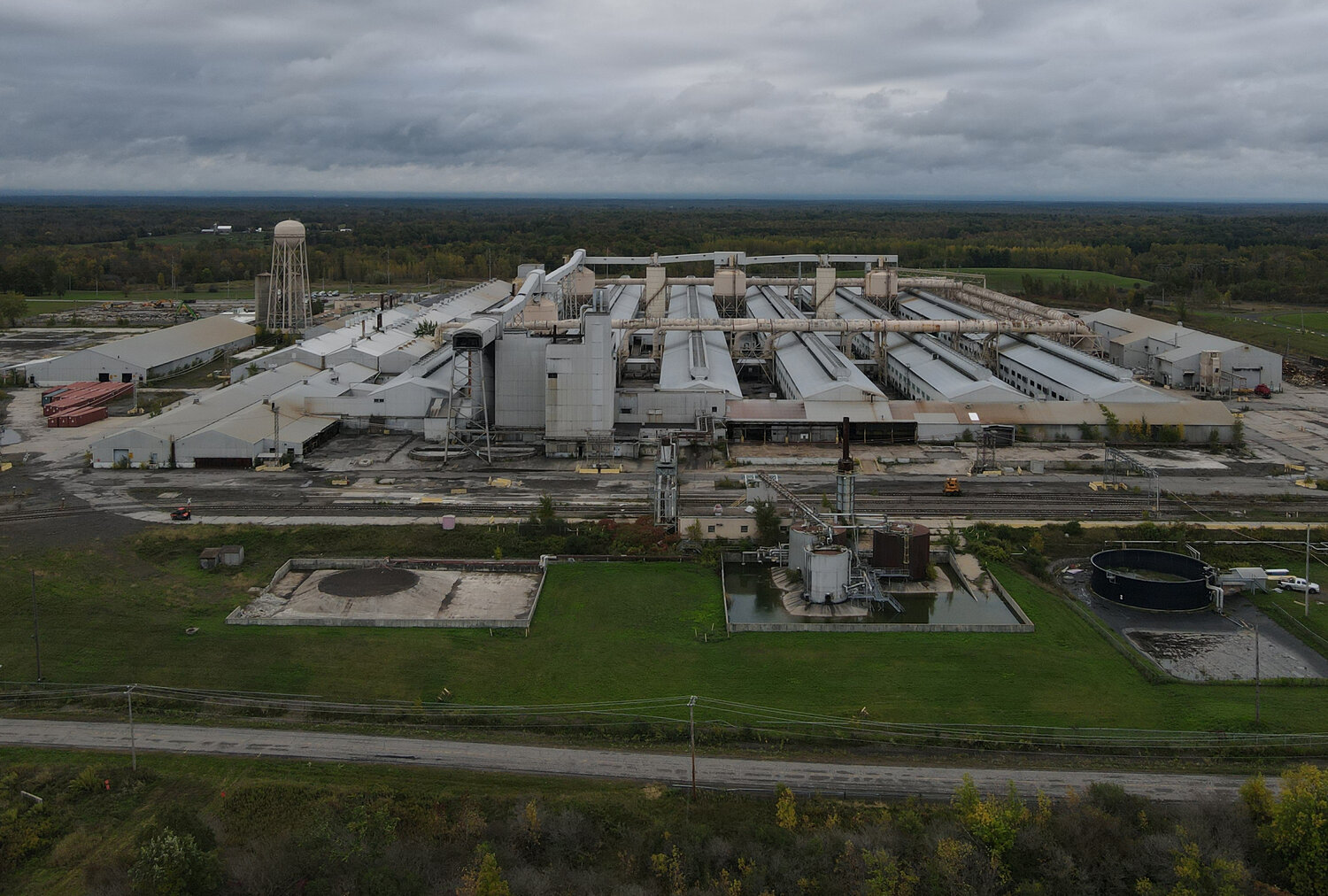
North Country Collocation Services has operated at the former Alcoa East site for a decade, however a strategic partnership in Oct. 2024 was the first step to expansion.
Those plans, which include three new buildings totaling nearly 1.5 million square feet, are on hold after Governor Kathy Hochul placed a one-year moratorium on hyper scale data center development.
Parent company NYDIG is still navigating the planning process after St. Lawrence County officials sent the plans back to the town planning board with a number of recommendations.
Local residents have also pushed for a three-year moratorium, with David Fenton delivering a petition with more than 450 signatures.
“This is a cause to pause, to study, and to protect Massena and the surrounding communities before making an irreversible decision,” he said.
Fenton has long been a critic of the existing operation, questioning the environmental impact, energy use and what he says is a "lack of job creation."
"When they first started in 2017 they promised at least 200 jobs. They employee roughly 60 a decade later. Now they're promising 400 jobs. So, we'll have what, maybe 100 to 120? I don't see the benefit," he previously said.
With the proximity to the St. Lawrence River and Akwesasne Mohawk Tribal lands the proposal has drawn a number of complaints from tribal members in recent months as well.
Mohawks United in Safety and Health (MUSH) has also been active in opposition to all data centers, including the proposed expansion of NYDIG.
At recent meetings MUSH members have lined the room with signs in protest.
Drummers also protested outside of town hall, greeting meeting goers and raising awareness of the dangers of data centers.
Though the impassioned meeting attendees sometimes interjected outside of public comment, board members allowed the comments to play out.
Multiple members of the Tribe spoke of the negative impact industry in Massena has had on Tribal members, in particular elevated levels of cancer due to PCBs in the Grasse River.
Federal officials invested millions of dollars in dredging and capping efforts in recent years, however Tribal members said the damage is already done.
While many speakers opposed the plans, former-Mayor Jim Hidy said Massena was in need of the possible revenue generated.
“You’re living in a dying community. You have no revenue coming in here. What you’re going to start seeing eventually, I would predict within the next three years, you’re going to have to start laying people off,” he said.
Hidy said if the plans were significantly delayed or canceled, jobs would be lost, leaving Massena in an even worse position.
But a number of speakers countered the argument, saying the health risks far outweigh any benefits.
To mitigate concerns, NYDIG officials presented an update site plan with the planning board, however no public comment was offered as the board planned no official action.
Planning Board Chair Vance Fleury attempted to clarify the meeting protocol, however some attendees still took a moment to speak of their concerns.
It’s just a presentation from NYDIG. They’re resubmitting their original application with a lot of updates. There is no decision-making. The way it goes with the planning board we will hold a public meeting in the future and let everybody speak in a timely manner, in an organized manner. But tonight it’s the presentation only. The board might ask questions, but it’s not open to everybody asking questions,” he said.
Many of the organization's concerns stem from the potential environmental impact.
Those concerns were raised again during both the town and planning board meetings.
“My friend lives on the river. You can kiss it all goodbye if they put in their center and steal all of your water. It doesn’t matter what’s going on at the library or the river at the fishing. You put a data center in, you’re going to kill the environment,” one speaker commented.
Carter McLean, who is the director of data center development and community relations for NCCS, said the plans now included a closed-loop cooling system that would not impact the St. Lawrence River.
“We are not going to connect with any of the local waterways,” NCCS head of engineering Harsh Patel said.
He clarified the cooling system would be filled from an external source and have no discharge or "dumping of the water."
To cover environmental review expenses, NYDIG has already deposited $100,000 in an escrow account controlled by the town.
The funds can be used to cover the costs of consulting with third-party firms.
Lindsey Haubenreich said NYDIG felt it was important to ensure the town could undertake an independent review with no impact to taxpayers.
"We want to make sure that the town is getting their own independent third party to review all those technical materials, but the costs of that review will not be borne by the town or its taxpayers,” she said.
Some Tribal members previously questioned what consultants would be used and how the findings of the reports would be published.
NYDIG and town officials both said they would provide updates on the respective websites.
For more information, visit www.nccs.one/massena#project-details